If I had a dollar for every time a stakeholder told me, “Just get started; we’ll figure out the requirements as we go,” I’d have retired to a cabin in the woods years ago. But here we are. In the world of IT and engineering, the “discovery phase project” is often treated like a black box—a place where good intentions go to die and scope creep thrives.
After nine years in the trenches—first as a PMO coordinator and now as a Project Manager—I’ve learned that “unclear requirements” isn’t a roadblock; it’s a design constraint. You don’t need a perfect plan; you need a system for navigating the fog. Let’s talk about how to keep the ship moving when the map is blank.
The PM Landscape: Why Your Role Matters Now More Than Ever
First, take a breath. If you feel like your project is messy, remember that you are part of a massive, growing industry. The demand for skilled project managers is skyrocketing. According to the Project Management Institute (PMI), the global economy will need 25 million new project professionals by 2030. Why? Because as AI and automation change how we work, the human skill of navigating ambiguity is becoming the most valuable currency in the marketplace.
When requirements are unclear, you aren't just "managing tasks"—you are performing high-level leadership. You are the bridge between the boardroom’s vague vision and the engineering team’s technical reality. This is where the PMI Talent Triangle comes in. You need to flex all three corners:
- Ways of Working: Using the right frameworks to manage the discovery phase. Power Skills: Communicating, motivating, and influencing stakeholders. Business Acumen: Understanding how "unclear requirements" impact the bottom line.
The "PM Speak" Translator: What Are They Actually Saying?
Part of my job involves managing my "List of Phrases That Confuse Stakeholders." When requirements are fuzzy, stakeholders tend to use specific types of language. Let's translate those into plain English so you can get the answers you actually need.
"PM Speak" What They Actually Mean The Better Way to Ask "We need to be Agile." "I don't know what I want yet." "What is the single most important outcome we need to achieve by [Date]?" "Let's just start coding." "I’m anxious about the timeline." "If we start now, we’ll build on a guess. Can we spend 2 hours mapping the core assumptions first?" "It’s a high-level requirement." "I haven't thought this through." "What does 'done' mean for this feature? How will we know it’s successful?"Step 1: Weaponize the "Assumptions Log"
When you don’t have requirements, you have assumptions. If you don’t document them, they become "hidden risks," which is my biggest professional pet peeve.
Start an Assumptions Log on day one. This isn't just a spreadsheet; it’s your shield. When a stakeholder asks why a feature changed, you point to the log. When you’re unsure of a technical direction, you write down your assumption, attach a deadline to it, and get the stakeholder to sign off.
Pro-tip: Always ask, “What does ‘done’ mean?” before you start any task. If they can’t define what "done" looks like—whether it’s a working API, a signed-off design, or a validated user story—you haven’t cleared the path to start work yet.
Step 2: Leverage Your Tooling (PMO365 and Beyond)
Do not attempt to manage a project in the "unknown" using email chains. You need a centralized system. Whether you are using specialized PMO software or a robust platform like PMO365, the goal is visibility.
In a discovery phase, your tool should act as a "Single Source of Truth." Use these tools to:
Track Decision Gates: Don't just track tasks; track decisions. Visualize Dependencies: Show stakeholders that "unclear requirement X" is physically blocking "technical task Y." Centralize Communication: If it isn’t in the project management tool, it didn’t happen. This protects your team from the "I thought we said..." conversation.Step 3: Leading and Motivating a Team in the Dark
Your team will get frustrated if they feel like they are "spinning their wheels." As a project manager, your job is to create a "safe container" for the ambiguity.
Here is how you keep morale up when the goalposts are moving:
- Protect the Team: Shield the engineers from the stakeholders' anxiety. You handle the "What's the status?" emails; they handle the technical discovery. Celebrate "Small Wins": If requirements are vague, progress is hard to measure. Define tiny milestones—like "Finished the database schema draft" or "Validated the user journey map." Even if the project is huge, these small wins keep the team feeling productive. Radical Transparency: Be honest with the team. Tell them, "We don't have the full requirements yet, so we are going to focus on prototypes this week." People can handle uncertainty; they can't handle feeling like their time is being wasted.
Step 4: Managing Stakeholders (Without Losing Your Mind)
Stakeholders often hate "meetings without an agenda." When requirements are unclear, they fear that a meeting is just another black hole. Change the format.
Stop having "Update Meetings" and start having "Decision Meetings."
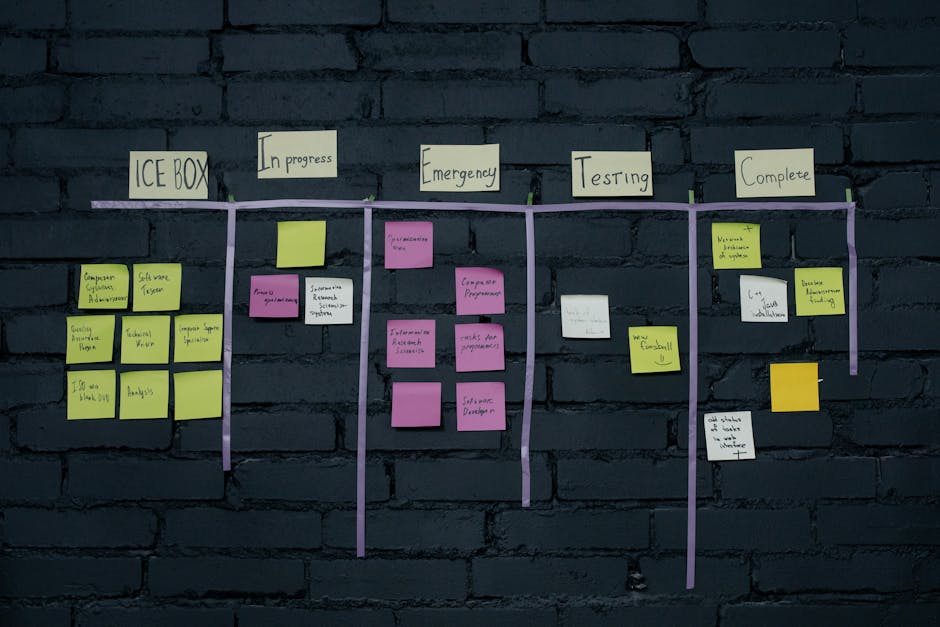
If you don't have an agenda, don't hold the meeting. When you do send an invite, include exactly one question: "We have three options for this workflow. We need to decide on one to proceed. Here is the data for each." By forcing a decision, you force the stakeholder to engage with the requirements, effectively turning "vague" into "clear."
The Bottom Line: Embrace the Discovery
Remember, the discovery phase is not a delay. It is a necessary investment. If you rush through it because you are afraid of an "ASAP" deadline, you will pay for it in re-work, technical debt, and team apollotechnical.com burnout.
Own the process. Use your assumptions log, use your PMO365 dashboards to force visibility, and always, always ask, "What does done mean?"
You’re building something that matters. Keep the communication clear, the risks documented, and the team focused. That’s how you lead through the fog.
Enjoyed this post? Check out my other articles on managing technical debt and avoiding the "Status Update Trap." Let's connect on LinkedIn if you want to swap stories about stakeholders who think "ASAP" is a due date.
